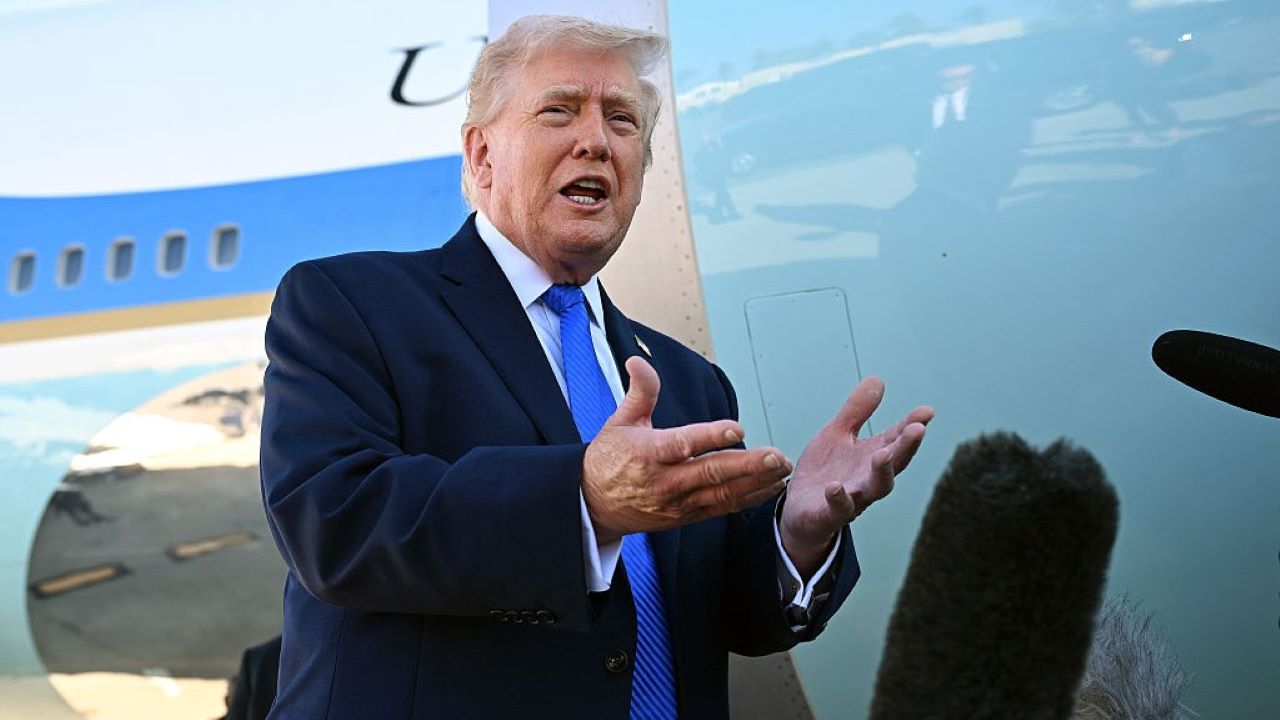
President Donald Trump has suggested a potential siege on an Iranian stronghold, as the country appears to be loosening its grip on the crucial Strait of Hormuz, allowing 20 cargo ships to pass through the waterway.
What Happened
On Monday, President Trump floated the idea of seizing Iran's Kharg Island, a strategic location in the Persian Gulf that serves as a major oil export terminal. This statement comes as Tehran has shown signs of easing its control over the Strait of Hormuz, a vital shipping lane that connects the Persian Gulf to the Gulf of Oman. The Strait is a critical waterway for international oil trade, with a significant portion of the world's oil supply passing through it. The decision to allow 20 cargo ships to travel through the Strait may indicate a shift in Iran's stance, potentially reducing tensions in the region.
The development is being closely watched by the international community, as any escalation in the region could have far-reaching consequences for global oil markets and stability. The Strait of Hormuz has been a focal point of tensions between Iran and the United States, with both countries engaging in a war of words and strategic maneuvers in recent months. The U.S. has maintained a significant military presence in the region, with the aim of protecting its interests and ensuring the free flow of oil.
The Iranian government has not publicly responded to President Trump's suggestion of seizing Kharg Island, but it is likely that such a move would be met with strong resistance from Tehran. Iran has consistently stated that it will defend its territorial integrity and sovereignty, and any attempt to capture the island would likely be seen as a provocation. As the situation continues to unfold, diplomats and analysts are closely monitoring the actions of both countries, seeking to understand the implications of these developments and the potential for further escalation.
Why It Matters
The situation in the Strait of Hormuz and the potential for U.S. action against Iranian strongholds has significant implications for global oil markets and regional stability. The free flow of oil through the Strait is crucial for the global economy, and any disruption could have far-reaching consequences. Additionally, the tensions between the U.S. and Iran have the potential to draw in other countries, including Israel and Saudi Arabia, further complicating the situation. As such, the international community is watching the developments closely, seeking to understand the motivations and actions of the key players and the potential for a peaceful resolution to the tensions.
What's Next
As the situation continues to unfold, it is likely that the U.S. and Iran will engage in further diplomatic and strategic maneuvers. The U.S. may continue to apply pressure on Iran, seeking to limit its influence in the region and protect its interests. Iran, on the other hand, may seek to maintain its sovereignty and territorial integrity, potentially leading to further escalation. The international community will be closely watching the developments, seeking to understand the implications and potential consequences of the actions of both countries. Diplomatic efforts may be necessary to reduce tensions and prevent further conflict, and the situation will likely remain a major focus of international attention in the coming days and weeks.
Source: Fox News
Comments
Post a Comment