Trump Deploys ICE to Airports

Trump Deploys ICE to Airports

As the partial government shutdown continues, President Trump has announced that ICE agents will be assisting TSA officers at airports to help mitigate worsening delays, according to recent reports.

What Happened

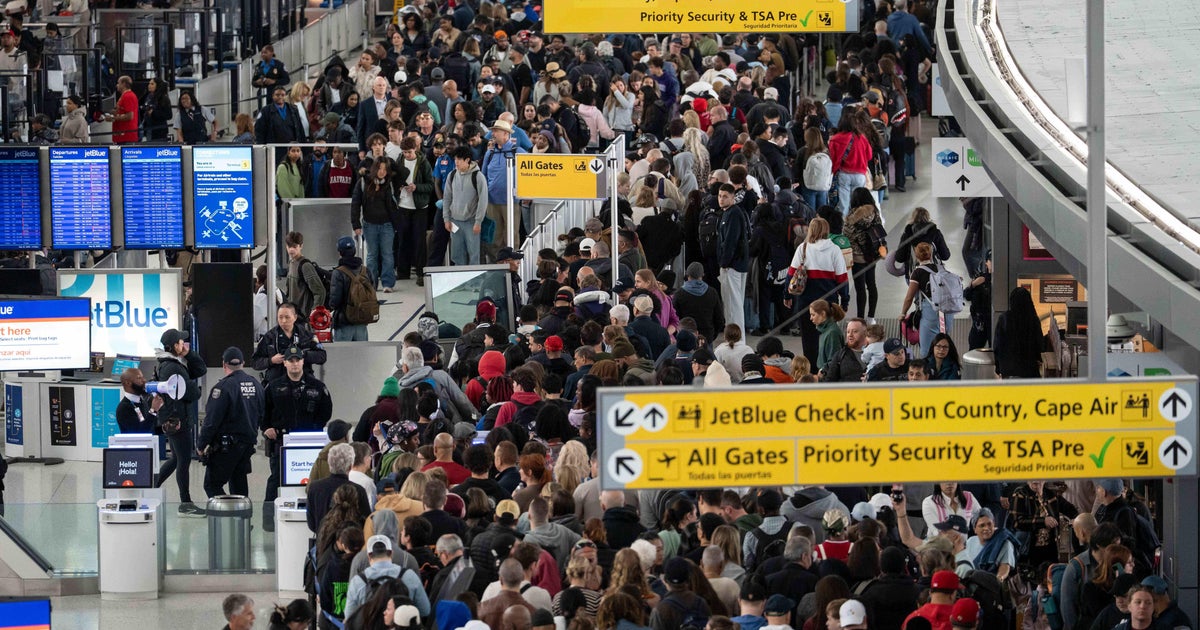
The current government shutdown has resulted in a significant increase in wait times at airports across the country, with many Transportation Security Administration (TSA) officers calling in sick or refusing to work without pay. In an effort to address the issue, President Trump has stated that Immigration and Customs Enforcement (ICE) agents will be deployed to assist TSA officers with screening passengers and luggage. This move is seen as a temporary solution to help alleviate the congestion and long wait times at airports.

The situation at airports has been deteriorating over the past few weeks, with some airports experiencing wait times of up to 2 hours or more. The lack of funding for the Department of Homeland Security (DHS) has meant that TSA officers have not received paychecks, leading to a significant increase in absences and a decrease in morale. The deployment of ICE agents is intended to help fill the gap and ensure that airport security is maintained, but it is unclear how effective this solution will be in the long term.

Despite the efforts to address the issue, wait times are not expected to improve significantly until government funding is restored and TSA officers receive their paychecks. The shutdown has had a significant impact on the travel industry, with many flights delayed or canceled due to the lack of personnel. The situation is not only affecting travelers but also having a broader impact on the economy, with many businesses that rely on air travel experiencing significant disruptions.

Why It Matters

The situation at airports is a direct result of the ongoing government shutdown, which has resulted in a lack of funding for the DHS. The shutdown has had far-reaching consequences, affecting not only the travel industry but also many other areas of government. The use of ICE agents to assist TSA officers is a temporary solution, but it highlights the need for a more permanent fix to the funding issue. Until government funding is restored, the situation at airports is likely to continue, causing disruptions to travelers and the broader economy.

What's Next

As the shutdown continues, it is unclear when a resolution will be reached. The deployment of ICE agents to assist TSA officers is a short-term solution, but it is not a sustainable fix to the problem. To address the issue, Congress and the President will need to reach an agreement on funding for the DHS, which would allow TSA officers to receive their paychecks and return to work. Until then, travelers can expect continued delays and disruptions at airports, and the broader economy will continue to feel the impact of the shutdown.

Source: CBS News

Comments

Popular posts from this blog

'They hit so hard the house was shaking': Iranians describe impact of US-Israel attacks

Residents in Iran have described the intense impact of ongoing US-Israel attacks, with many reporting that the explosions have been so powerful they have caused houses to shake, as the country faces a third day of strikes. What Happened The attacks, which have been ongoing for three days, have resulted in widespread explosions being heard across the country, both day and night. People in Iran have shared their experiences with the BBC, describing the intense fear and disruption caused by the constant bombardment. Many have reported that the explosions have been so powerful that they have caused houses to shake, with some even describing the sound as deafening. The US and Israel have continued to launch strikes against Iran, with the exact targets and motivations behind the attacks still unclear. However, it is understood that the attacks are part of a broader effort to target Iranian military and strategic assets. The Iranian government has vowed to respond to the attacks, but so fa...

Bonnie Rotten Arrested

Jesse James' estranged wife, Bonnie Rotten, also known as Alaina James, has been taken into custody by authorities in Texas, according to recent reports. What Happened Details of the arrest are still emerging, but it is confirmed that Bonnie Rotten was arrested in Texas. The circumstances surrounding her arrest have not been fully disclosed, but it is known that she and Jesse James are currently estranged. The couple's marital issues have been subject to public scrutiny, and this latest development adds another layer to their complicated situation. Bonnie Rotten, whose real name is Alaina James, has been in the public eye due to her relationship with the well-known television personality and motorcycle manufacturer, Jesse James. While specific charges against Bonnie Rotten have not been announced, her arrest marks a significant turn in her highly publicized personal life. As the estranged wife of a celebrity figure, her actions and circumstances often attract media attentio...

How AI can read our scrambled inner thoughts

A revolutionary breakthrough in artificial intelligence is allowing scientists to decipher the complex electrical signals in our brains, effectively "reading" our innermost thoughts and bringing us closer to a future where technology can interpret our deepest intentions. Overview In a groundbreaking study, researchers at Stanford University in California have successfully used AI to decode the brain signals of a 52-year-old woman who was left paralyzed and unable to speak clearly after a stroke 19 years ago. By implanting a tiny array of electrodes in her brain, the team was able to translate her internal monologue into text on a screen, allowing her to communicate in a way that was previously impossible. This remarkable achievement is a significant step forward in the development of brain-computer interfaces (BCIs), which have the potential to transform the lives of people with severe neurological disorders. The study, which also involved three patients with amyotrophic l...